Jump To:
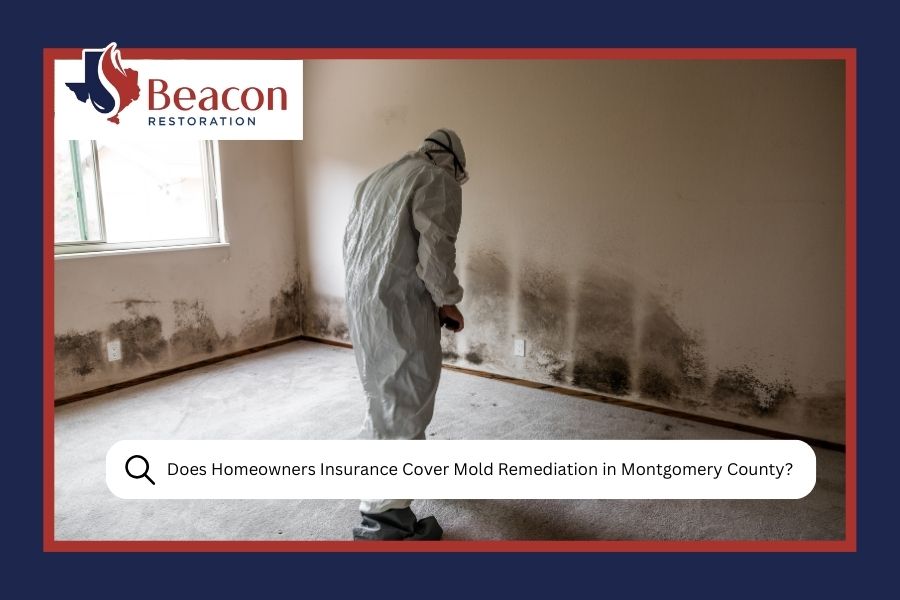
If you’ve discovered mold in your Montgomery County home, one of your first questions is probably whether your homeowners insurance will cover the remediation costs. The answer isn’t always straightforward, and understanding the specifics of your policy can save you time, stress, and potentially thousands of dollars.
At Beacon Restoration Services, we work with insurance companies daily and help homeowners navigate the claims process. Let’s break down what you need to know about mold coverage in Texas.
Understanding Your Homeowners Insurance Policy
Most homeowners insurance policies in Texas follow a similar pattern when it comes to mold coverage. The key factor isn’t whether mold is present, but rather what caused it in the first place. Insurance companies typically look at mold as a secondary issue resulting from a primary event.
Your standard policy likely includes some level of mold coverage, but it’s often limited. Many Texas policies cap mold remediation coverage at $5,000 to $10,000, though some offer higher limits as optional add-ons. The catch? This coverage only applies when mold results from a covered peril.
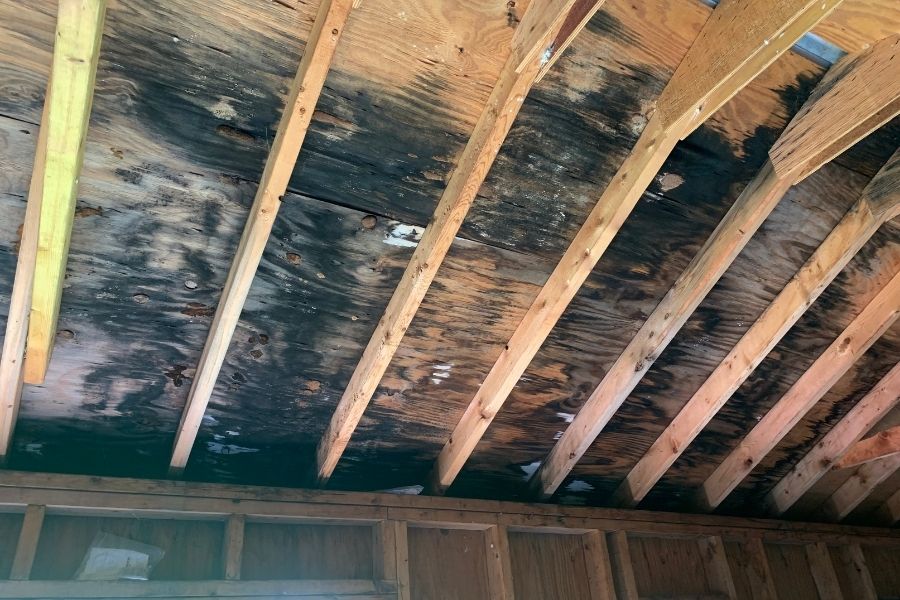
Mold often appears when moisture issues go unaddressed
When Mold Remediation Is Typically Covered
Insurance companies generally cover mold remediation when it results from sudden and accidental water damage. Here are the most common scenarios where coverage applies:
Burst Pipes and Plumbing Failures
When a pipe bursts unexpectedly or your water heater suddenly fails, any resulting mold growth is usually covered. The same goes for appliance leaks from your washing machine, dishwasher, or refrigerator, as long as the malfunction was accidental and not due to lack of maintenance.
Storm and Weather-Related Damage
If a storm damages your roof and rain enters your home, mold that develops as a result should be covered. This includes scenarios like wind-driven rain through damaged windows or water intrusion from hurricane damage. The critical factor is that the water entered due to sudden storm damage, not existing deterioration.
Firefighting Efforts
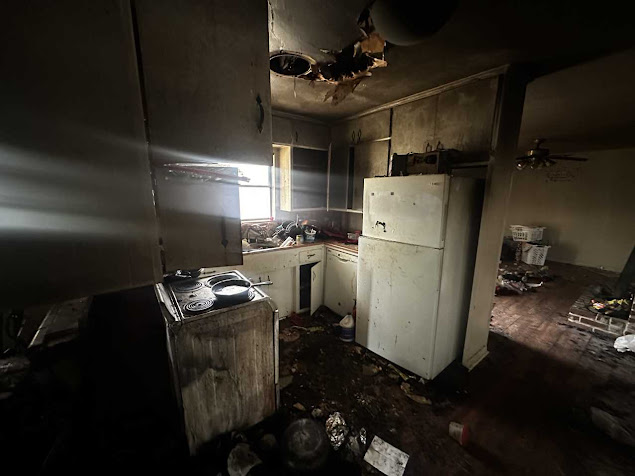
Water used to extinguish a fire can create ideal conditions for mold growth. If you experience fire damage and subsequent mold appears from firefighting water, your insurance should cover both the fire and mold remediation under your policy.
Discovered Mold in Your Montgomery County Home?
Our team at Beacon Restoration Services can help you document the damage and work directly with your insurance company.
Call us 24/7 at (936) 286-1692
When Mold Remediation Isn’t Covered
Understanding when insurance won’t cover mold is just as important as knowing when it will. Here are the situations where you’ll likely be paying out of pocket:
Long-Term Neglect and Maintenance Issues
If mold develops because you ignored a small leak or failed to maintain your home properly, insurance won’t cover it. Policies specifically exclude damage resulting from lack of maintenance or gradual deterioration. That slow drip under your sink that you’ve been meaning to fix? If it leads to mold, you’re on your own.
High Humidity and Condensation
Texas summers are brutal, and our climate creates perfect conditions for mold. Unfortunately, mold caused by high humidity, condensation, or poor ventilation isn’t covered by insurance. This includes mold in bathrooms without proper ventilation, around AC units with condensation issues, or in attics with inadequate airflow.
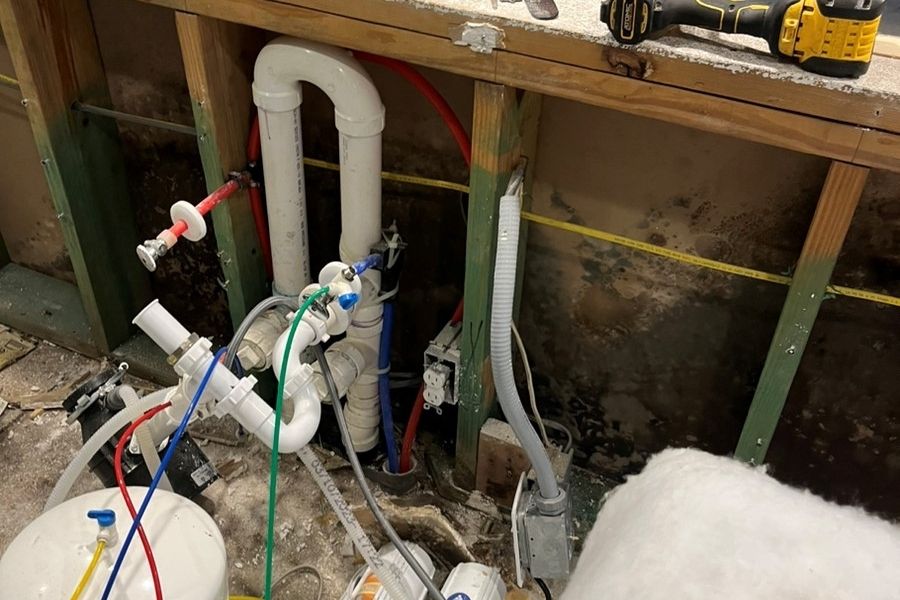
Quick action after water damage can prevent extensive mold growth
Flooding
Standard homeowners insurance doesn’t cover flood damage, which means it won’t cover mold resulting from flooding either. In Montgomery County, where river flooding is our most common cause of water damage, this distinction matters. You need separate flood insurance through the National Flood Insurance Program (NFIP) to protect against flood-related issues.
How to Document Damage for Your Claim
When you discover mold in your home, proper documentation can make or break your insurance claim. Here’s what you need to do immediately:
| Action Step | Why It Matters | Timeline |
|---|---|---|
| Take Photos and Videos | Visual evidence shows extent and location of damage | Immediately upon discovery |
| Note the Discovery Date | Proves timeline of damage development | Day of discovery |
| Document Water Source | Shows the cause was sudden and accidental | Within 24 hours |
| Contact Your Insurer | Starts the claims process officially | Within 48 hours |
| Get Professional Assessment | Provides expert documentation for claim | As soon as possible |
Keep all receipts, repair estimates, and communication with your insurance company. If you had to stay elsewhere during remediation, save those receipts too, as additional living expenses may be covered under your policy.
Working With Restoration Professionals
Choosing the right restoration company can significantly impact your insurance claim’s success. At Beacon Restoration Services, we’re IICRC certified in mold remediation and have years of experience working with insurance companies throughout Montgomery County.
Professional restoration companies provide several advantages when dealing with insurance claims. We document everything according to industry standards, use calibrated equipment to measure moisture levels, and provide detailed reports that insurance adjusters understand. We also use EPA-recommended protocols for safe mold removal.
Our team can walk you through the entire restoration process, from initial assessment to final clearance testing. We work directly with your insurance adjuster and provide the documentation they need to process your claim efficiently.
What to Expect From the Insurance Process
After filing your claim, an adjuster will visit your property to assess the damage. They’ll look for evidence that the mold resulted from a covered event and wasn’t due to negligence or maintenance issues. Having professional documentation ready makes this process smoother.
The adjuster will determine what’s covered based on your policy limits and the cause of the mold. If they approve your claim, they’ll issue a payment based on their assessment. Sometimes there’s negotiation involved, which is where having a restoration company familiar with insurance requirements helps tremendously.
Pro Tip for Montgomery County Homeowners
Don’t wait to address water damage concerns, even minor ones. What your insurance covers today might not be covered tomorrow if the problem worsens due to delay. Quick action protects both your home and your coverage.
Free Mold Inspections
We offer free mold inspections to Montgomery County residents because we believe you deserve to know what you’re dealing with before making any decisions. During an inspection, we’ll identify the type and extent of mold present, locate the moisture source, and explain your options clearly.
It’s worth noting that in Texas, companies that perform mold testing cannot also perform remediation on the same property. This is state law designed to prevent conflicts of interest. We’re licensed for both services but follow the law strictly, so if we test your property, we’ll connect you with another qualified remediation company if needed.
Frequently Asked Questions
Does homeowners insurance cover mold from AC leaks?
It depends on the circumstances. If your AC suddenly malfunctions and leaks, causing mold, your insurance will likely cover it. However, if the leak developed slowly due to poor maintenance or your failure to service the AC unit regularly, coverage will probably be denied. The key distinction is whether the leak was sudden and accidental versus the result of gradual neglect.
How quickly do I need to report mold to my insurance company?
Report mold damage to your insurance company as soon as you discover it, ideally within 48 hours. Most policies require prompt notification of damage. Delays can complicate your claim because insurers may argue that you allowed the damage to worsen. Document everything immediately, take photos, and contact both your insurance company and a professional restoration service quickly.
Will my rates go up if I file a mold claim?
Filing any claim can potentially impact your insurance rates, but it’s not guaranteed. The effect depends on your insurance company’s policies, your claims history, and the specifics of your situation. For significant mold damage from a covered event, filing a claim usually makes financial sense despite potential rate impacts. However, for minor damage close to your deductible amount, you might consider paying out of pocket. Discuss this decision with your insurance agent before filing.
What if my insurance company denies my mold claim?
If your claim is denied, first request a detailed explanation in writing. Review your policy carefully to understand the denial reason. You have the right to appeal the decision by providing additional documentation or evidence. Working with a public adjuster or an experienced restoration company like Beacon Restoration Services can help strengthen your appeal. We’ve successfully helped many Montgomery County homeowners get initially denied claims reconsidered by providing proper documentation and demonstrating that the mold resulted from a covered event.
Need Help With Mold Remediation?
Beacon Restoration Services is here for Montgomery County homeowners 24/7. We’ll help you understand your coverage and handle the insurance process from start to finish.