Jump to Section:
So you’re standing in your Montgomery home with water creeping across the floor, and you’re wondering, “What now?” Look, nobody plans to deal with water damage, but here you are. The good news? Professional water damage restoration isn’t as mysterious as you might think. It’s actually a pretty straightforward process when you know what to expect.
Let’s walk through exactly what happens when the pros show up to save your property.
The Initial Emergency Call: Setting Things in Motion
When you call a restoration company after discovering water damage, you’re not just scheduling an appointment. You’re starting the clock on something urgent.
At Beacon Restoration Services, we answer calls within minutes, 24/7, because we know water doesn’t wait for business hours. That late-night pipe burst? The Sunday morning water heater failure? We’re on it. And honestly, the faster you call, the better your chances of minimizing damage. Water has this annoying habit of finding every crack, crevice, and porous surface in your home.
During that first call, we’ll ask you some questions. Don’t worry, it’s not an interrogation, just important details like what type of water (clean supply line vs. sewage backup makes a huge difference), how much water, and how long it’s been sitting. This helps us bring the right equipment and set realistic expectations for you.
Pro tip: Take photos and videos before touching anything. Your insurance company will thank you later, and knowing what your insurance actually covers can save you a major headache.
Water Damage Timeline
Minutes
Water spreads quickly through porous materials
24-48 Hours
Mold and bacteria start growing
1 Week+
Structural damage and serious health risks
Step 1: The Emergency Response and Initial Assessment
We show up within an hour in Montgomery County, which sounds ambitious until you realize how much damage can happen in 60 minutes. Water spreads fast, and the sooner we can start extraction, the better.
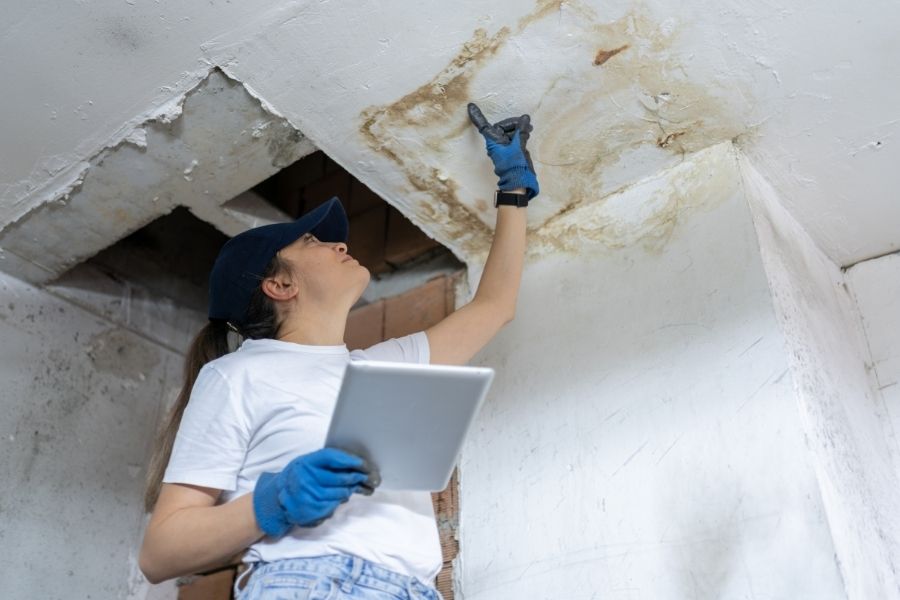
Our technicians use advanced moisture detection equipment to identify hidden water damage during the initial assessment
What Happens During the First Visit
First things first, we’re going to walk through your property with you. We’ll use moisture meters and infrared cameras to find water you can’t even see yet. Yeah, those high-tech gadgets aren’t just for show. Water loves hiding in walls, under flooring, and in places you’d never think to look.
Here’s what we’re checking:
- The extent of water migration
- Which materials are affected (drywall, carpet, hardwood, etc.)
- The category of water contamination
- Structural safety concerns
- What needs immediate attention vs. what can wait
We’ll document everything with photos and measurements because your insurance company needs proof, and honestly, it protects everyone involved.
Safety First, Always
Before we do anything else, we’re making sure it’s safe to even be in the space. Standing water and electricity? Not friends. If there’s any concern about structural integrity or contamination, we’re not sugarcoating it. Hidden water damage is sneaky, and we’ve seen too many cases where homeowners had no idea water was lurking behind that wall for weeks.
Step 2: Water Extraction – Getting the Obvious Stuff Out
This is where the heavy equipment comes in. We’re talking industrial-grade pumps and vacuums that can handle everything from standing water to soaked carpets.
Extraction needs to happen fast. Like, really fast. The longer water sits, the more it seeps into materials, the higher your restoration bill climbs, and the greater your chances of developing mold problems. In Texas humidity? Mold can start growing in 24-48 hours. No pressure, right?
Need Emergency Water Damage Help?
We’re available 24/7 and arrive within 1 hour in Montgomery County
Call (936) 286-1692 – We Answer Within Minutes
The Equipment We Use
Truck-mounted extraction units can remove hundreds of gallons per minute. Submersible pumps handle deeper water. And for carpets and upholstery? We’ve got specialized tools that pull moisture out without destroying the material.
We’re not just pushing water around with a Shop-Vac. Professional extraction means getting as close to dry as possible before moving to the next phase. Think 95% of the water removed, not just the puddles you can see.
Step 3: Drying and Dehumidification – The Long Game
Here’s where patience comes in. Once the obvious water is gone, the drying process begins. And spoiler alert: it’s not quick.
| Material | Typical Drying Time | Notes |
|---|---|---|
| Carpet | 2-4 days | Depends on padding thickness |
| Drywall | 3-5 days | Interior walls dry faster |
| Hardwood Flooring | 5-7 days | May require refinishing |
| Concrete | 7-10 days | Porous material holds moisture |
| Insulation | Often replaced | Usually can’t be dried effectively |
Industrial Air Movers and Dehumidifiers
We set up air movers (they look like big fans, but they’re way more powerful) to create airflow across wet surfaces. These work with commercial dehumidifiers to pull moisture from the air. Together, they create the perfect environment for materials to dry without warping or growing mold.
Your home is going to sound like an airport for a few days. Sorry about that. But the noise means it’s working.
How Long Does Drying Actually Take?
Real talk: usually 3-7 days, sometimes longer depending on the extent of damage. Hardwood floors take longer than carpet. Drywall in exterior walls takes longer than interior walls. And if you had sewage involved? Add time for extra precautions.
We monitor moisture levels daily using those fancy meters, and we don’t pull equipment until readings confirm everything is dry to industry standards. Not “feels dry to the touch,” but actually dry according to IICRC guidelines.
The IICRC (Institute of Inspection, Cleaning and Restoration Certification) sets the standards that restoration professionals follow, ensuring work is done properly.
Step 4: Cleaning and Sanitizing
Water brings friends to the party, and by friends, I mean contaminants, bacteria, and general nastiness you don’t want in your home.
Different Water, Different Protocols
Clean water from a supply line? We’re cleaning and sanitizing affected areas.
Gray water from appliances or rain? More intensive cleaning with antimicrobial treatments.
Black water from sewage or flooding? Full disinfection protocol, protective equipment, and in some cases, disposal of affected materials because they just can’t be safely cleaned.
We treat your belongings, your walls, your floors, and anything the water touched. Air scrubbers with HEPA filters run to clean the air while we work. It’s thorough because it has to be. You can’t see bacteria, but they’re definitely there. The EPA recommends professional cleaning for any water damage involving contamination.
Step 5: Removing Damaged Materials
This is the tough part. Sometimes materials can’t be saved.
What Usually Needs to Go
Heavily saturated drywall almost always comes down. Wet insulation loses its R-value and becomes a mold factory. Carpets that sat in contaminated water? Those are headed to the dumpster. Warped hardwood that can’t be salvaged? Sorry, but it’s gone.
At Beacon Restoration, we try to save what we can because we get that every item has value, both monetary and sentimental. But we’re also not going to leave something behind that could cause problems down the road.
Content Pack-Out and Storage
For belongings that need specialized cleaning or just need to be moved out of the way during reconstruction, we offer pack-out services. Your stuff goes to our in-house facility where it’s cleaned, inventoried, and stored until your home is ready. Professional content restoration means you get your things back, not just an empty space.
Step 6: Reconstruction and Repairs
Once everything is dry and clean, we rebuild. This is where your property goes from disaster zone back to home.
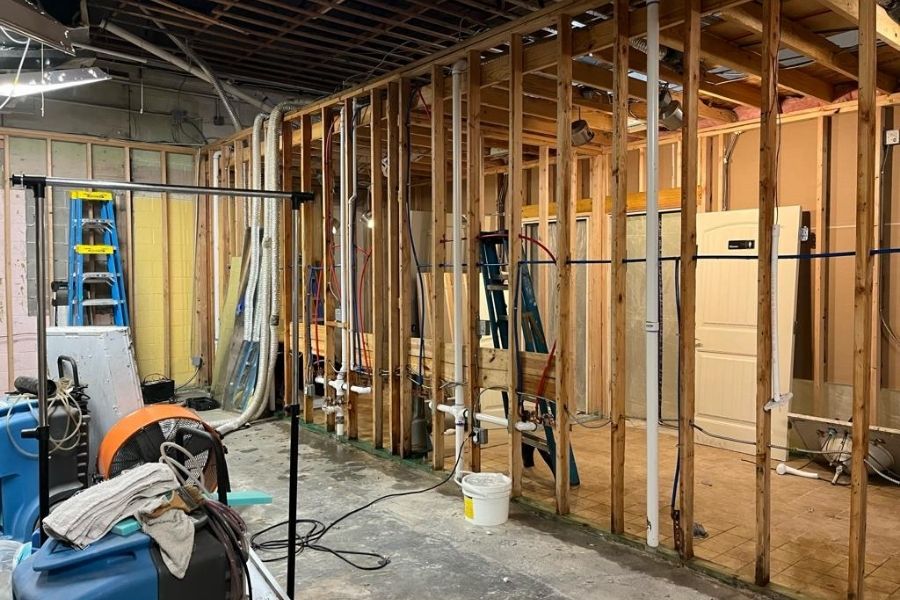
Our reconstruction team handles everything from drywall replacement to complete rebuilds, restoring your property to pre-damage condition
From Mitigation to Rebuild
The beauty of working with a full-service restoration company is you don’t have to hire three different contractors. We handle the entire process, from water extraction to hanging new drywall to painting the walls. Our reconstruction services cover everything from minor repairs to complete rebuilds.
New flooring, replaced baseboards, repaired ceilings, whatever got damaged in the process. Our goal is to make it look like nothing ever happened.
One important note: You can usually stay in your home during restoration, depending on the extent of damage. If it’s a single room affected, you’re probably fine. If it’s your entire first floor? You might want to stay with family for a bit.
Step 7: Final Inspection and Documentation
Before we shake hands and head out, there’s a final walkthrough. We’re checking that everything meets our standards and, more importantly, yours.
What We’re Looking For
- All moisture readings are within acceptable ranges
- No lingering odors
- All repairs are complete and pass inspection
- You’re satisfied with the work
We also provide complete documentation of the entire process for your records and insurance company. Photos, moisture logs, work orders, the whole nine yards.
The Timeline Nobody Wants to Hear (But Needs To)
How long does the entire process take? Honestly, it depends.
A minor leak caught early? Could be done in a week. Major flooding that requires extensive repairs? We’re talking 4-6 weeks, sometimes more. Hurricane damage can take months because everyone’s calling at once and materials become hard to source.
What I can promise: we’re as fast as we can be while still doing it right. Cutting corners to speed things up just means problems later, and nobody wins in that scenario.
Working With Your Insurance
Most homeowners insurance policies cover sudden and accidental water damage. But “most” isn’t “all,” and the details matter.
We work directly with insurance companies, providing the documentation they need and communicating throughout the process. We know what adjusters are looking for because we’ve done this thousands of times.
Will your insurance cover everything? Maybe, maybe not. That depends on your policy, your deductible, and the cause of the damage. But we’ll help you navigate it, which takes one headache off your plate.
Why Professional Restoration Beats DIY
Could you rent some equipment and try to handle this yourself? Technically, yes. Should you? Probably not.
Professional water damage restoration involves specialized equipment you can’t rent at Home Depot, knowledge of building science and drying principles, understanding of contamination levels and proper cleaning protocols, and relationships with insurance companies that smooth the process.
Plus, if you don’t dry everything properly, you’re looking at mold growth, structural damage, and health issues down the road. The money you save up front could cost you exponentially more later.
What to Do Right Now
Found water damage? Here’s your action plan:
- Stop the water source if possible – Shut off the main water valve if it’s a plumbing issue
- Call your insurance company – Start a claim immediately
- Call professional restoration – Get experts on site ASAP
- Document everything – Photos and videos of all damage
- Remove valuables – Get important items to dry ground
- Don’t wait – Every hour counts when it comes to water damage
The Bottom Line
Professional water damage restoration is a process, and like any process, it has steps that need to happen in order. From that first emergency call to the final inspection, it’s about doing things right, not fast.
At Beacon Restoration Services, our team of IICRC-certified technicians has over 65 years of combined experience handling everything from burst pipes to hurricane aftermath. We’re locally owned, family-operated, and we treat your property like it’s our own.
Because at the end of the day, water damage is stressful enough without worrying about whether your restoration company knows what they’re doing.
Need help with water damage in Montgomery, Spring, or College Station? Contact us for a free assessment. We answer within minutes and we’re on site within an hour. That’s not marketing hype, that’s how we operate.
Water doesn’t wait. Neither should you.
Frequently Asked Questions
How much does professional water damage restoration cost?
Cost varies significantly based on the extent of damage, the category of water, and what materials need replacement. A small leak might run $2,000-$4,000, while major flooding can exceed $10,000. Most homeowners insurance policies cover water damage restoration when it’s sudden and accidental, making your out-of-pocket cost just your deductible. We provide free estimates and work directly with your insurance company to streamline the process.
Can I stay in my home during the restoration process?
It depends on the severity and location of the damage. If water damage is contained to one area and there are no safety concerns or contamination issues, you can typically stay. However, extensive damage requiring significant demolition, sewage contamination, or structural concerns may require temporary relocation. We’ll assess your specific situation during the initial inspection and give you an honest recommendation.
How do I know if I have hidden water damage?
Hidden water damage shows up through several warning signs: musty odors you can’t locate, unexplained increases in your water bill, warped or buckling floors, water stains on ceilings or walls, and peeling paint or wallpaper. Professional moisture detection using infrared cameras and moisture meters can identify water you can’t see before it becomes a major problem.
What’s the difference between water damage restoration and flood damage?
Water damage restoration typically refers to internal water issues like burst pipes, appliance leaks, or roof leaks. Flood damage specifically involves external water entering your property from natural disasters, storm surge, or overflowing bodies of water. The restoration process is similar, but flood insurance requirements and procedures differ from standard homeowners insurance coverage. Most homeowners policies don’t cover flooding, which requires separate flood insurance.
Dealing With Water Damage in Montgomery County?
24/7 Emergency Response • On-Site Within 1 Hour • Free Assessment
IICRC Certified • 65+ Years Combined Experience • Locally Owned
Serving Montgomery, Spring, College Station & All of Montgomery County